Fotona Laser Treatments for Sun Damage and Pigmentation
Sun damage rarely shows up all at once. More often, it accumulates quietly, then seems to appear overnight in the mirror. A few scattered brown spots become clusters. Freckles that once faded in winter start lingering year-round. Skin tone loses its clarity, and the face can take on a mottled, uneven look that makeup never fully corrects. For many patients, that is the point when topical products stop feeling like enough.
Fotona Laser Treatments have become a serious option for people trying to reverse visible sun damage and pigmentation without committing to surgery or prolonged recovery. The appeal is understandable. These systems offer versatility, precision, and the ability to tailor treatment to the depth and type of pigment involved. Still, laser treatment is not a magic eraser. It works best when the diagnosis is accurate, the settings are appropriate, and expectations are grounded in how skin actually heals.
That distinction matters because pigmentation is not one single problem. What patients call “sun spots” may include lentigines, post-inflammatory hyperpigmentation, melasma, diffuse redness mixed with pigment, or textural roughness from chronic UV exposure. Each responds differently. In practice, the best outcomes come from matching the treatment to the biology of the lesion, not just the appearance.
What sun damage and pigmentation really look like in clinic
When people describe sun damage, they usually mean discoloration. Clinically, the picture is broader. Years of ultraviolet exposure can lead to flat brown spots, patchy uneven tone, broken capillaries, enlarged pores, rough texture, fine wrinkling, and skin that looks dull even when it is healthy enough otherwise. Pigment often steals the attention first because it is easy to see, but texture and vascular change are commonly part of the same story.
A patient in her early forties might come in concerned about “dark spots on my cheeks,” only to discover she has three separate issues. She may have solar lentigines from cumulative sun exposure, a little diffuse redness around the nose, and a layer of surface roughness that makes the skin reflect light poorly. Treating only the dark spots can help, but the result may still feel incomplete. That is one reason laser platforms with multiple treatment modes are valuable. They can address different components of photodamage in a more integrated way.
Pigmentation itself also varies by depth. Superficial epidermal pigment generally responds more readily than deeper dermal pigment. The challenge is that these can coexist. Melasma is the classic example. It often has both epidermal and dermal components, fluctuates with hormones and heat, and can worsen if treatment is too aggressive. This is where good judgment matters more than device marketing.
Where Fotona fits
Fotona is a laser platform known for combining different wavelengths and treatment approaches. Depending on the specific system and handpiece being used, practitioners can target pigment, vascular irregularity, texture, and collagen remodeling. In the context of sun damage and pigmentation, the conversation usually centers on resurfacing and pigment-focused treatments that remove or disrupt damaged skin while encouraging healthier regeneration.
One practical advantage of Fotona systems is flexibility. A clinician can often adapt the treatment intensity to suit the patient’s skin type, downtime tolerance, and the severity of damage. Some patients want a lighter series with minimal interruption to work and social life. Others would rather have a stronger treatment and accept several days of visible recovery. Neither approach is automatically better. The best option depends on skin tone, diagnosis, season, recent sun exposure, and how disciplined the patient will be about aftercare.
Another strength is that Fotona treatments can often be layered thoughtfully. For instance, a patient with pigment and roughness may respond well to a plan that combines surface renewal with selective treatment of deeper discoloration over multiple visits. That kind of customization is often more realistic than expecting one session to solve years of UV-related change.
How Fotona Laser Treatments improve pigment
Lasers improve pigmentation by delivering controlled energy into skin. That energy is absorbed by specific targets, commonly melanin or water in the tissue, depending on the wavelength and treatment mode. Once the target absorbs https://maps.app.goo.gl/qXD4j3287tCBo42W7 the energy, the skin begins a repair process. Pigmented cells break apart or rise to the surface and shed. Damaged superficial layers can be removed. Collagen remodeling may also be triggered, which helps with the textural side of photodamage.
What patients usually notice first is one of two patterns. In some treatments, the dark spots temporarily get darker for several days before flaking away. In others, the skin looks pink and feels dry or rough as it heals, then gradually appears brighter and more even. Both responses can be normal. The exact course depends on the treatment settings and the problem being addressed.
This is where patient education matters. If someone expects immediate brightening by the next morning, they are almost always disappointed. Laser work is a healing event. The visible improvement unfolds over days to weeks, and collagen-related benefits continue to develop after the pigment has already started clearing.
Not every brown spot should be lasered
This is one of the most important clinical realities, and it deserves emphasis. Before treating pigmentation, a provider needs confidence about what the spot is. Many pigmented lesions are benign, especially lentigines from sun exposure, but suspicious lesions should never be casually passed over. Changes in asymmetry, border, color variation, or recent evolution warrant evaluation. A careful practitioner does not skip this step.
Even within benign pigmentation, there are reasons to pause. Recent tanning raises the risk of complications. Active inflammation, eczema, or barrier disruption can make healing less predictable. Melasma requires caution because overly aggressive treatment can provoke rebound pigmentation. Patients with darker skin tones can absolutely be treated, but settings, preparation, and device choice must respect the higher risk of post-inflammatory hyperpigmentation.
That is why a thoughtful consultation is not filler. It is where the likely cause of the pigmentation is sorted out, risk factors are identified, and the treatment plan is made realistic.
Which types of pigmentation respond best
Broadly speaking, discrete sun spots and uneven tone from chronic UV exposure tend to respond well. Epidermal pigmentation is usually the most satisfying category because it is accessible and often lifts predictably with proper treatment. Patients often see a cleaner, more even complexion after a series.
Melasma is more complicated. It can improve, but it tends to require a conservative hand and a long-term management mindset. Heat in general can aggravate melasma, so aggressive energy delivery is not always the answer. In these cases, treatment often works best as part of a wider plan that includes pigment-suppressing topicals, strict sun protection, and realistic expectations about maintenance.
Post-inflammatory hyperpigmentation from acne, irritation, or previous procedures can also improve, though timing matters. Treating actively inflamed skin is rarely a good idea. Letting the skin settle first often produces safer and better outcomes.
What treatment day is actually like
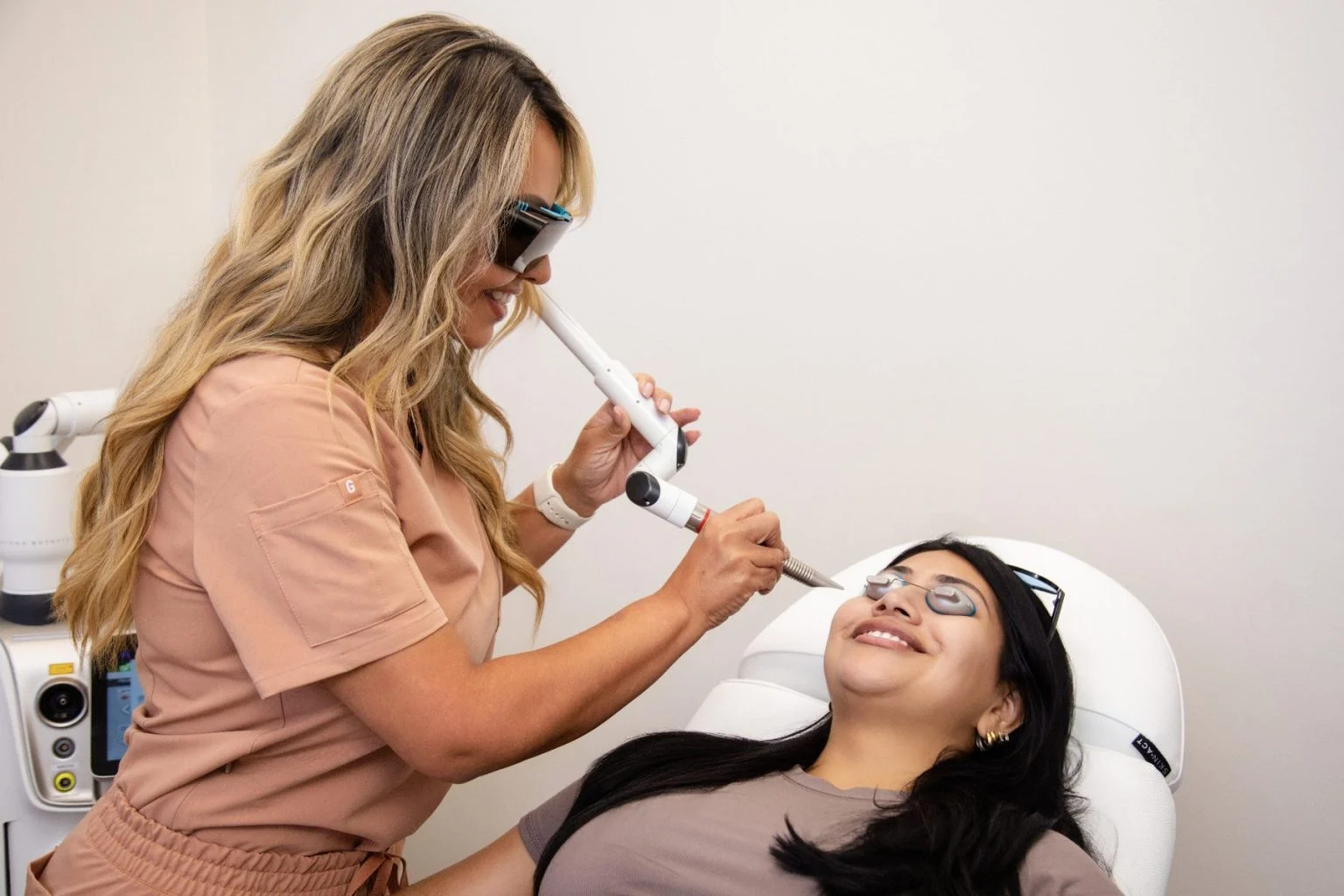
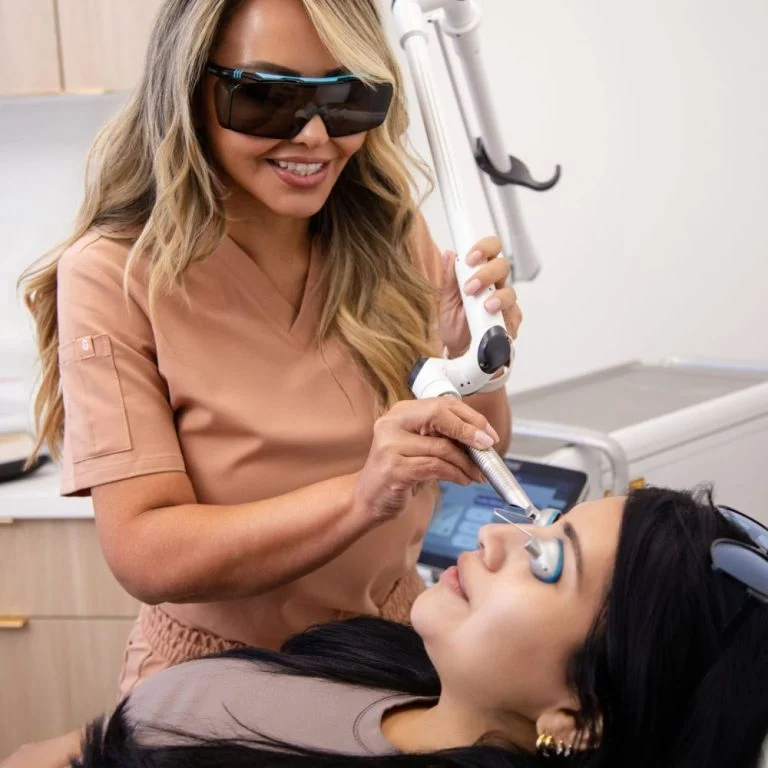
The practical details are usually less dramatic than patients imagine. The skin is cleansed, photography may be taken, and protective eyewear is used. Depending on the intensity of treatment, a topical numbing cream may be applied in advance. Some lighter sessions are tolerable without it, while stronger resurfacing treatments are much more comfortable with numbing.
During the procedure, most patients describe heat, snapping, or a prickling sensation. It is not usually pleasant, but it is often manageable, especially when the treatment is brief and cooling measures are used. On heavily sun-damaged areas such as the cheeks, nose, chest, or backs of hands, certain spots may sting more than others because pigment absorbs energy unevenly.
Afterward, the skin may appear flushed, warm, and mildly swollen. That response can last a few hours or several days, depending on the treatment depth. Pigmented areas often darken before they lift. Surface roughness or a bronzed, sandpapery texture is common during the healing phase. Patients are often reassured once they know this is expected and temporary.
Recovery, downtime, and the social reality
Downtime is one of the most misunderstood parts of laser treatment. Many people hear “non-surgical” and assume they can schedule a session on Friday and attend a wedding on Saturday looking polished. Sometimes that is possible with very gentle settings, but often it is not wise.
With lighter treatments, the visible aftermath may resemble a mild sunburn followed by dryness and tiny darkened specks that slough off over several days. Makeup may be possible after a day or two, if the skin is intact and the provider agrees. With stronger resurfacing, redness, swelling, peeling, and a more obvious recovery window are part of the deal. The chest and neck also tend to heal a little differently from the face, often more slowly and with more prolonged redness.
Patients who do best are usually the ones who plan ahead. They avoid intense sun exposure before and after treatment. They do not schedule a major social event in the immediate recovery period. They understand that “downtime” includes not only what the skin feels like, but what it looks like to everyone else.
The trade-offs: why stronger is not always better
There is a common assumption that a more aggressive treatment guarantees a better result. In reality, the strongest setting the skin can tolerate is not always the smartest choice. More intensity may mean faster visible change, but it also raises the chance of prolonged redness, irritation, and pigment rebound, especially in reactive skin or skin with a history of melasma.
A series of moderate treatments often gives a cleaner endpoint than one highly aggressive session. This is especially true when the goal is not just spot removal, but improvement in overall tone and skin quality. Gradual treatment also gives the provider a chance to observe how the skin responds and adjust accordingly. In experienced hands, that flexibility is often more valuable than brute force.
I have seen patients chase a one-and-done result and regret it when their recovery was longer than expected. I have also seen the opposite, where someone committed to a measured series and ended up with a fresher, more natural result because the skin had time to remodel rather than simply react.
Who tends to be a good candidate
The best candidates are not defined only by the severity of their sun damage. They are people whose skin issue has been correctly identified, who can follow aftercare, and who understand that maintenance matters. A person with a handful of lentigines, fair to medium skin, and a disciplined sunscreen habit may respond beautifully. A person with active melasma, recent tanning, and poor sun avoidance may not be ready, even if they are highly motivated.
Several factors are usually reviewed during consultation:
- Skin type and baseline pigment risk
- The specific type of discoloration being treated
- Recent sun exposure, tanning, or use of self-tanner
- History of melasma, scarring, or cold sores
- Willingness to follow post-treatment care closely
These details can sound routine, but they strongly influence safety and results. For example, a patient with a history of herpes simplex around the mouth may need antiviral prophylaxis before certain treatments. A patient using retinoids or exfoliating acids may need to stop them in advance to reduce irritation.
Aftercare is where many results are protected or lost
Laser treatment does not end when the device switches off. The recovery period shapes the final result more than many patients realize. Freshly treated skin is vulnerable. It needs support, not experimentation.
A simple routine is usually best. Gentle cleansing, bland moisturization, and rigorous photoprotection do more good than a cabinet full of active products. This is not the week to test a new acid toner or resume scrubbing because the skin looks flaky. Over-treatment at home can trigger irritation and, in pigment-prone skin, that can translate into more discoloration rather than less.
The instructions differ by treatment intensity, but a few principles are almost universal:
- Keep the skin moisturized and do not pick flaking pigment
- Avoid direct sun exposure and use broad-spectrum sunscreen daily
- Pause irritating actives until the skin barrier has clearly recovered
- Follow guidance on exercise, heat exposure, and makeup use
- Report unusual swelling, crusting, or prolonged irritation promptly
One of the most preventable disappointments in cosmetic dermatology is recurrent pigmentation after an otherwise good laser result. The usual culprit is not that the treatment failed. It is that UV exposure resumed, often in subtle ways. Driving, outdoor lunches, weekend walks, and heat exposure all add up. Patients who preserve their results best are usually the ones who treat sunscreen as part of the procedure, not an optional extra.
How many sessions are usually needed
There is no honest universal number. A few isolated sun spots may improve significantly after one session. More diffuse photodamage often benefits from a series, sometimes spaced several weeks apart. If texture, pore appearance, and fine lines are part of the concern, collagen remodeling usually rewards patience. The skin can look brighter early on, but the more refined improvements develop gradually.
This is another place where expectation setting is crucial. A patient in her fifties with twenty years of cumulative sun exposure should not be promised the skin she had at twenty-five. What is realistic is clearer tone, softened sun spots, improved surface quality, and a healthier overall appearance. That can be a meaningful shift, even if some deeper or more stubborn pigmentation needs maintenance over time.
Risks, side effects, and the honest part of the conversation
Any effective laser has the potential for side effects. The common short-term ones include redness, swelling, temporary darkening of pigment, dryness, and flaking. These are expected parts of the healing process when they occur within the normal range.
Less common but important risks include blistering, infection, prolonged redness, scarring, and post-inflammatory hyperpigmentation or hypopigmentation. The likelihood depends on skin type, treatment settings, aftercare, and whether the original diagnosis was correct. Sun exposure around the time of treatment is one of the easiest ways to raise complication risk.
Melasma deserves another mention here because it is one of the most frustration-prone conditions in cosmetic practice. It can improve with careful treatment, but it can also flare. Patients are much happier when this is discussed upfront rather than after the fact. Sometimes the best care is restraint, or a combination plan that uses laser conservatively rather than aggressively.
Fotona compared with simpler pigment approaches
Topical treatments, chemical peels, and intense pulsed light all have a role in managing pigmentation. Laser is not automatically superior in every case. A light peel and diligent sun protection may be enough for mild, superficial unevenness. A prescription topical may be the safer first move for melasma. Some patients are better served by starting there, then considering laser once the skin is more stable.
Where Fotona Laser Treatments tend to stand out is in their ability to address multiple features of photodamage in a nuanced way. A patient can improve pigment, texture, and skin quality within a coordinated treatment plan rather than tackling each problem in isolation. That said, the device is only as good as the operator and the strategy behind it. Technology matters, but judgment matters more.
The hands, chest, and neck are often the real giveaway
Many people focus on the face and forget the areas that often show sun damage first or most clearly. The chest, neck, shoulders, and backs of the hands accumulate years of incidental UV exposure. They can carry dense freckling, brown spots, and crepey texture that make the face look younger by comparison once the face has been treated.
These areas can respond well, but they should not be treated as an afterthought. The neck and chest, in particular, can be more reactive and slower to heal than facial skin. Settings may need adjustment, and aftercare compliance becomes even more important. Patients who include these zones in a thoughtful treatment plan are often the ones who achieve the most harmonious overall rejuvenation.
Choosing the right provider matters as much as choosing the device
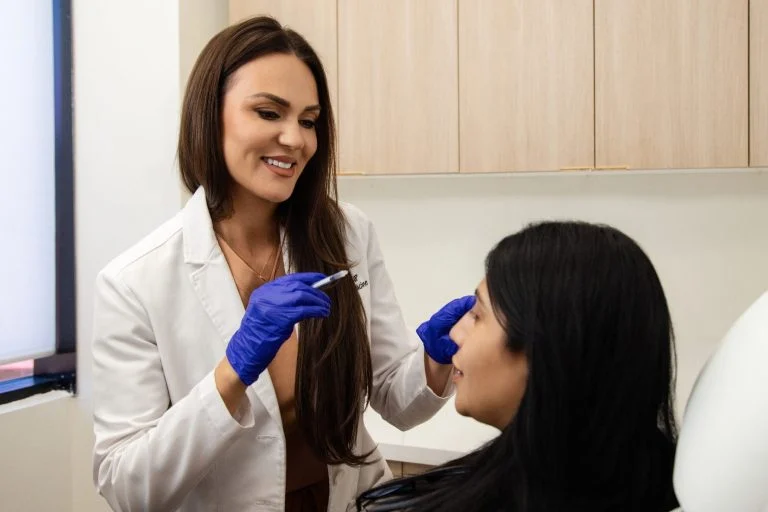
A strong laser platform does not compensate for weak assessment. Before moving forward, patients should feel that their provider has clearly identified the type of pigmentation present, explained what the treatment can and cannot do, reviewed downtime honestly, and tailored the plan to skin type and lifestyle.
That conversation should include alternatives. If a provider recommends laser for every pigment issue without discussing melasma risk, topical pre-treatment, or seasonality, that is a red flag. Good cosmetic medicine is rarely one-size-fits-all. It is selective, strategic, and grounded in restraint when restraint is the safer move.
The best outcomes in laser practice often look deceptively simple. The skin appears brighter, cleaner, and more even, but not overtreated. Friends may say a patient looks rested without being able to pinpoint why. That usually reflects a treatment plan that respected the biology of the skin rather than trying to overpower it.
What results feel like when they are done well
Patients often expect the win to be dramatic spot removal, and that can certainly happen. But the more satisfying result is often subtler and broader. Skin catches light differently. Makeup sits better. The face looks less tired because the mottled cast is gone. Small vascular and textural improvements contribute as much as pigment reduction, even when the patient did not realize those features were bothering them beforehand.
That is one reason Fotona Laser Treatments continue to attract interest for sun damage and pigmentation. When used well, they do not just chase isolated spots. They can improve the overall quality of photodamaged skin in a way that feels coherent and natural.
For the right patient, that can be a meaningful turning point. Not because the skin becomes flawless, but because it starts looking clearer, healthier, and closer to how it reflects light before years of sun exposure dulled it. In aesthetic medicine, those shifts often matter more than perfection.
OMNIA Wellness Center
Address: 16430 Ventura Blvd Ste 207, Encino, CA 91436
Phone number: +18183868511
FAQ About Fotona Laser Treatments
What is a Fotona laser good for?
A Fotona Laser system is a versatile, dual-wavelength medical laser used primarily for non-surgical skin tightening, anti-aging rejuvenation, and dermatological treatments.
How much does the Fotona laser cost?
The cost of a Fotona laser depends heavily on whether you are looking to purchase a laser machine for a medical practice or are a patient seeking a laser treatment at a medspa.
Is a Fotona laser worth it?
A Fotona laser treatment is generally worth it if you want non-surgical skin tightening, improved texture, and collagen stimulation with very little downtime.